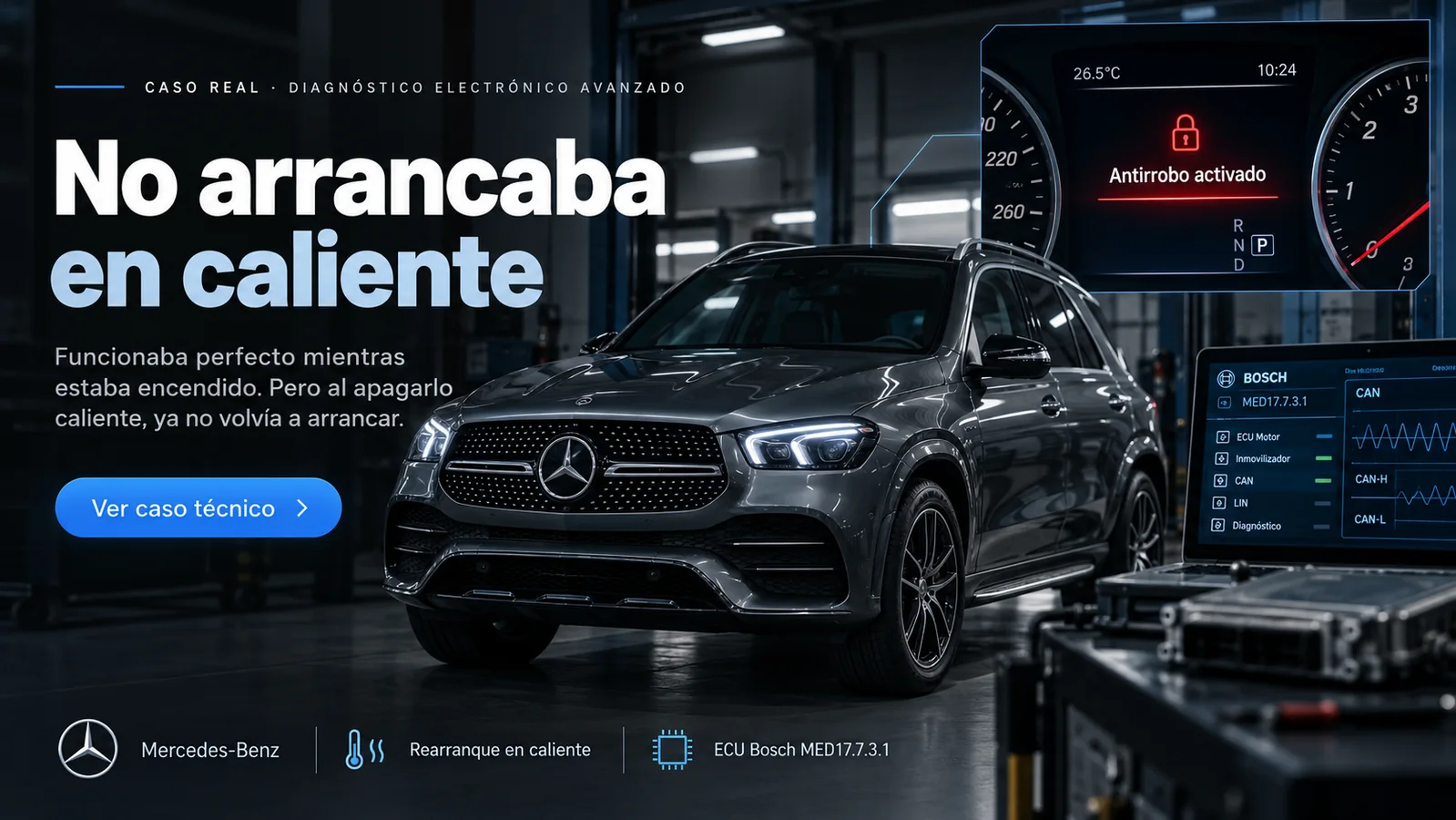
Mercedes-Benz: hot restart no-start
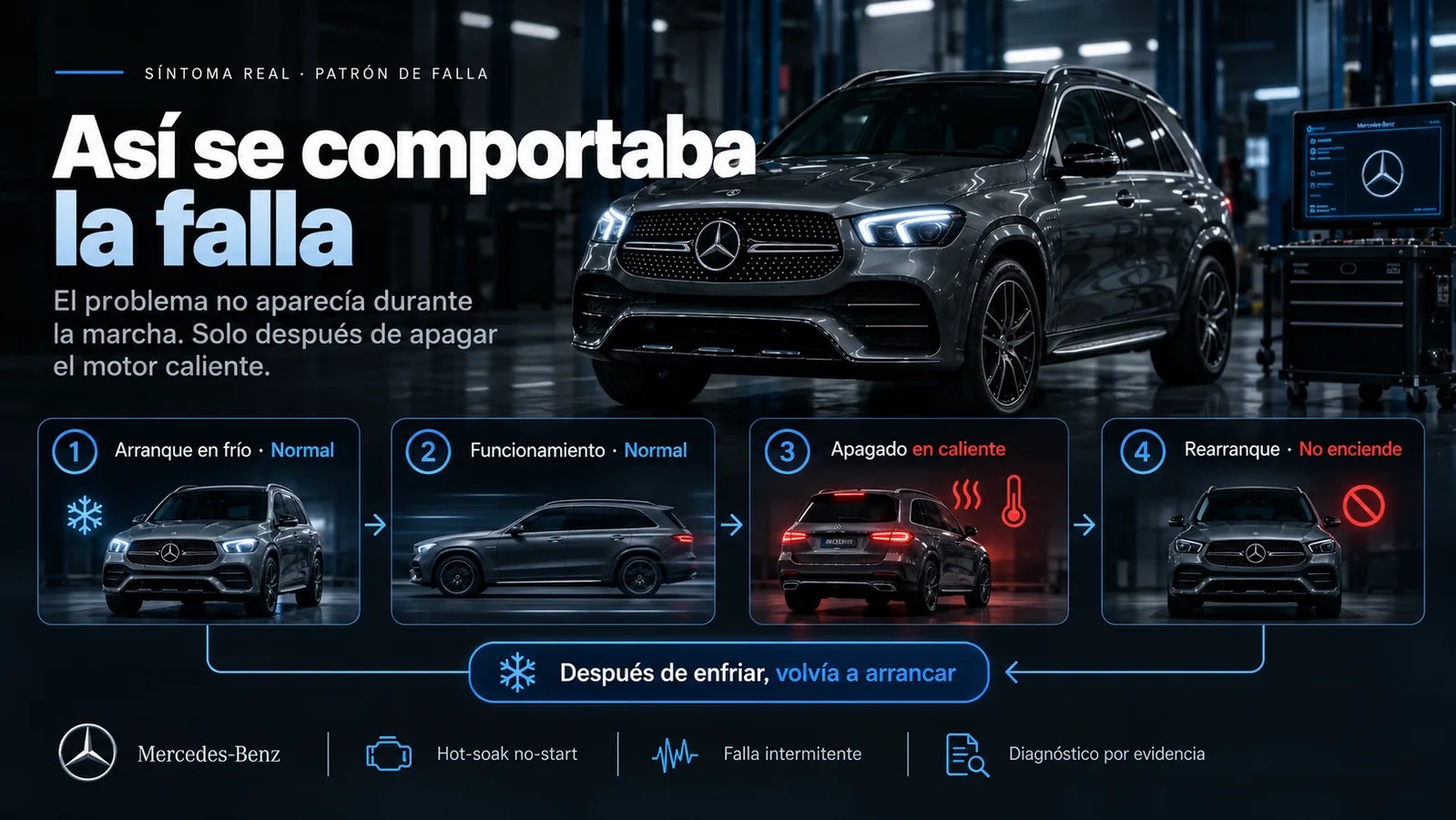
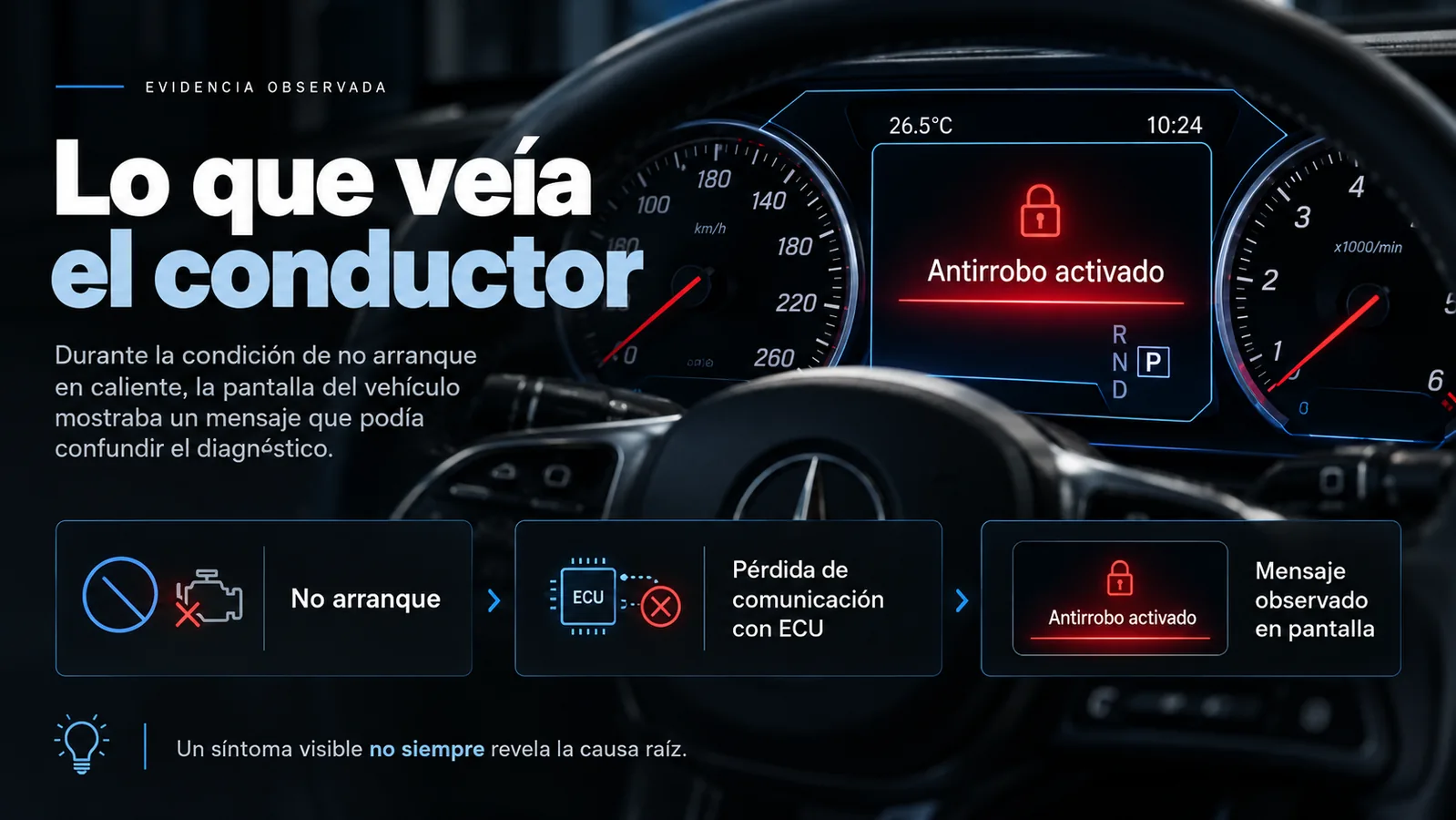
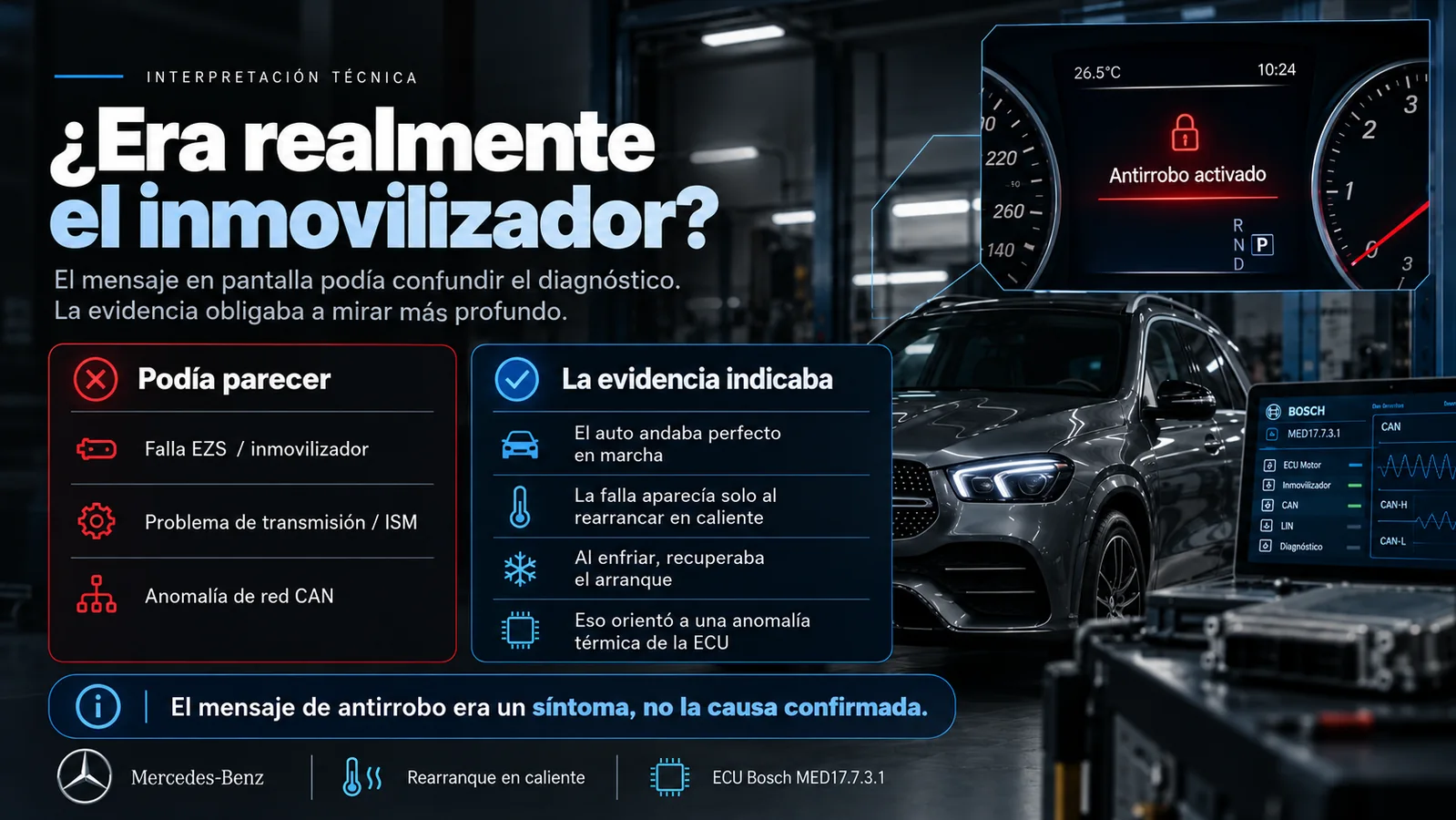
The vehicle ran perfectly, even at full operating temperature. Only after stopping the hot engine and attempting another start did the problem and an antitheft warning appear.
The case, step by step
Nine interactive slides based on the technician's observations, the August 27, 2026 TOPDON scan and the specialist lab's subsequent findings. The dashboard depiction is illustrative, not an original photograph.
Hot restart: engine would not start
The vehicle ran normally while its engine was on. The failure appeared only after shutting the engine off hot and trying to restart it.
What the original diagnostic report actually said
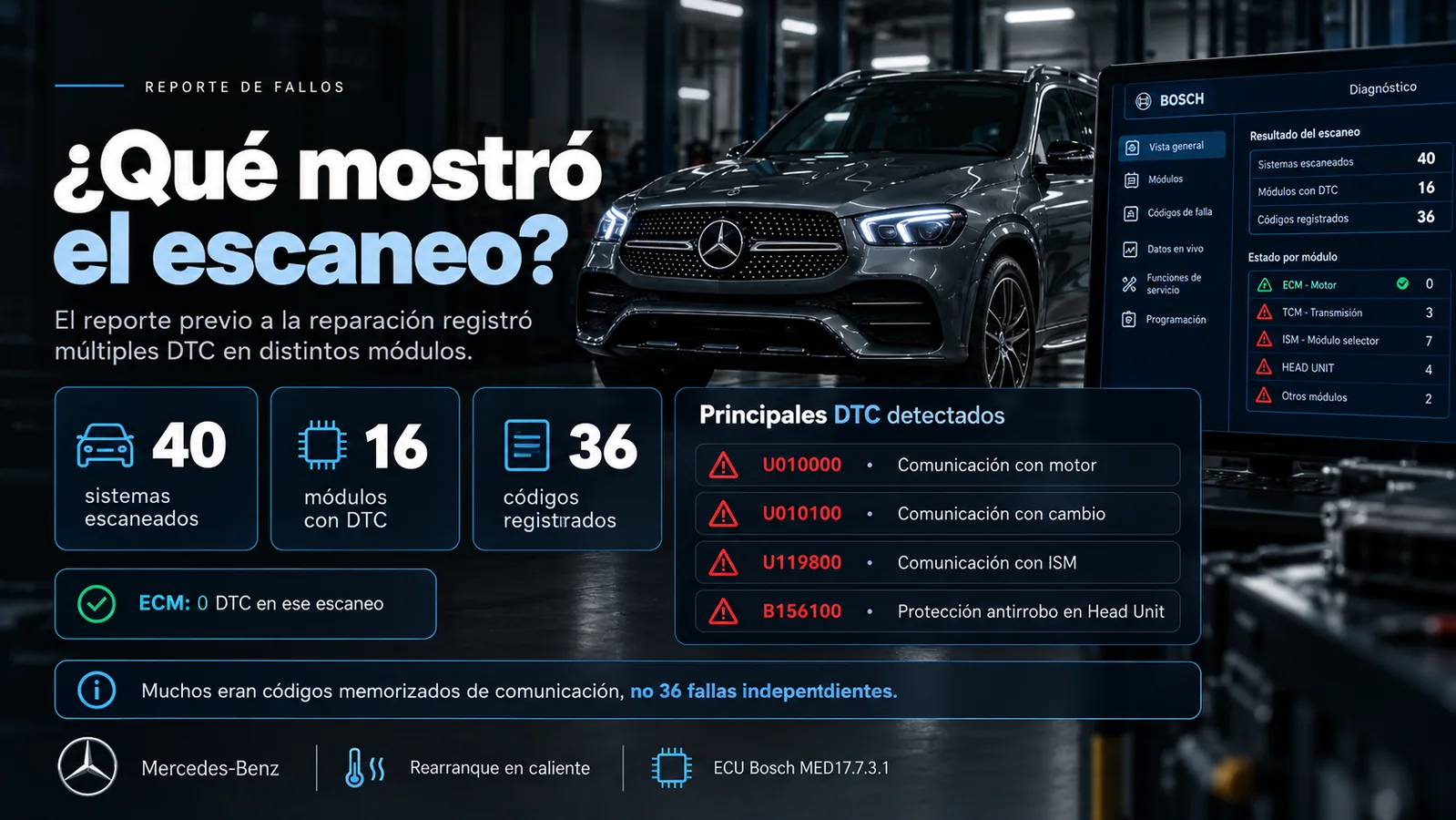
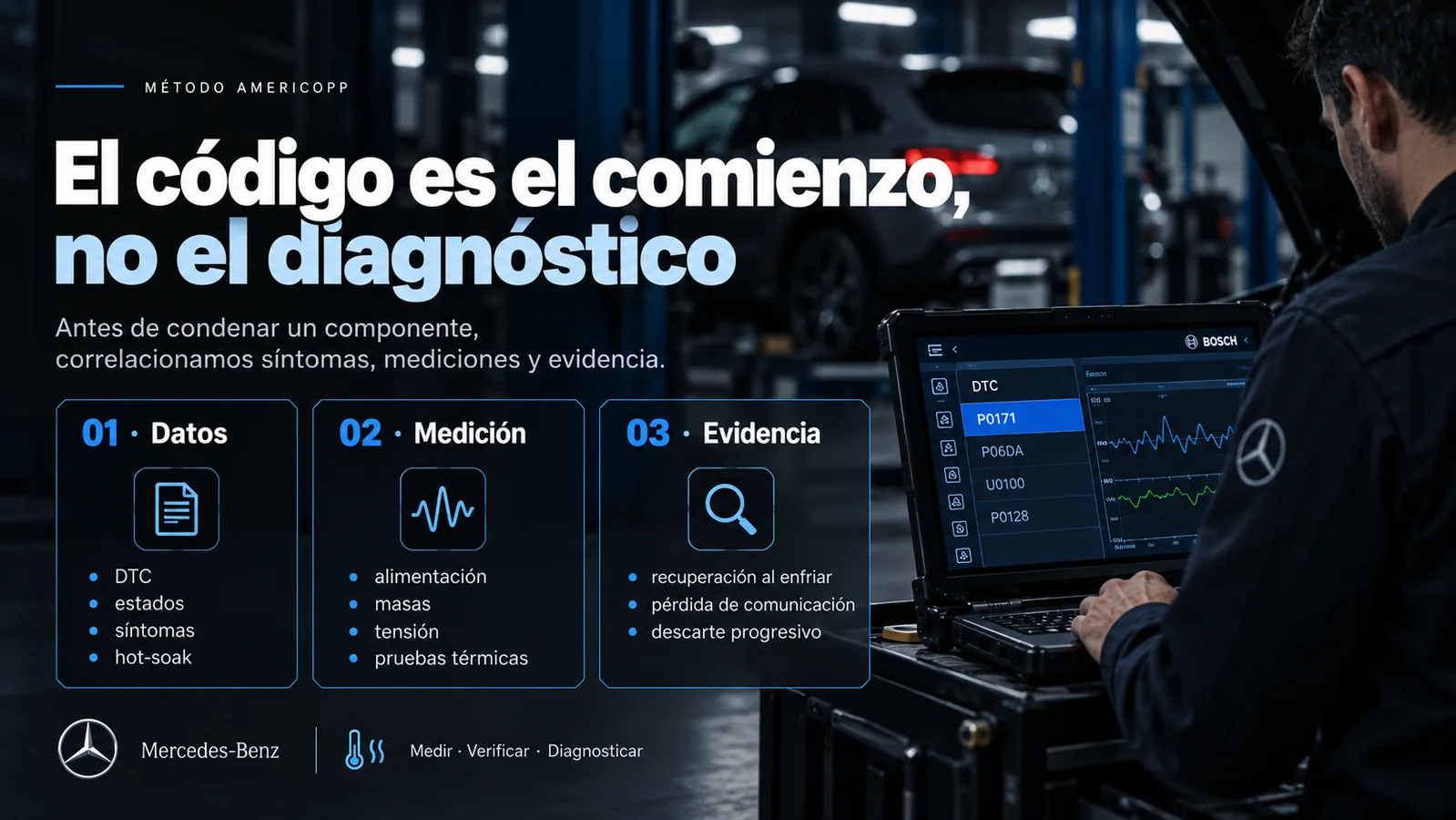
The pre-repair TOPDON report scanned 40 systems, finding 36 DTCs across 16 modules. An ECM reading of 0 DTCs at that time did not exclude an intermittent fault. The hot no-start had to be reproduced and investigated separately.
| Code | Reported meaning | Limit of interpretation |
|---|---|---|
| U010000 / U010087 | Missing or irregular engine ECU communication. | Not enough alone to prove the cause. |
| U010100 | Transmission communication anomaly. | A stored network DTC does not prove internal transmission failure. |
| U119800 | ISM communication anomaly. | Must be correlated with the fault event and network state. |
| B156100 | Antitheft PIN incorrect or missing in the Head Unit. | Infotainment fault; not proof of engine immobilizer failure. |
Evidence source: TOPDON pre-repair scan, August 27, 2026. Most DTCs were stored. Vehicle and customer identifiers withheld.
From hypothesis to confirmed cause
Vehicle-side tests
Americopp verified supply and wiring, cleaned moisture-affected external terminals, compared cold/hot behavior, and verified that cooling the ECU area restored communication and starting.
Specialist laboratory
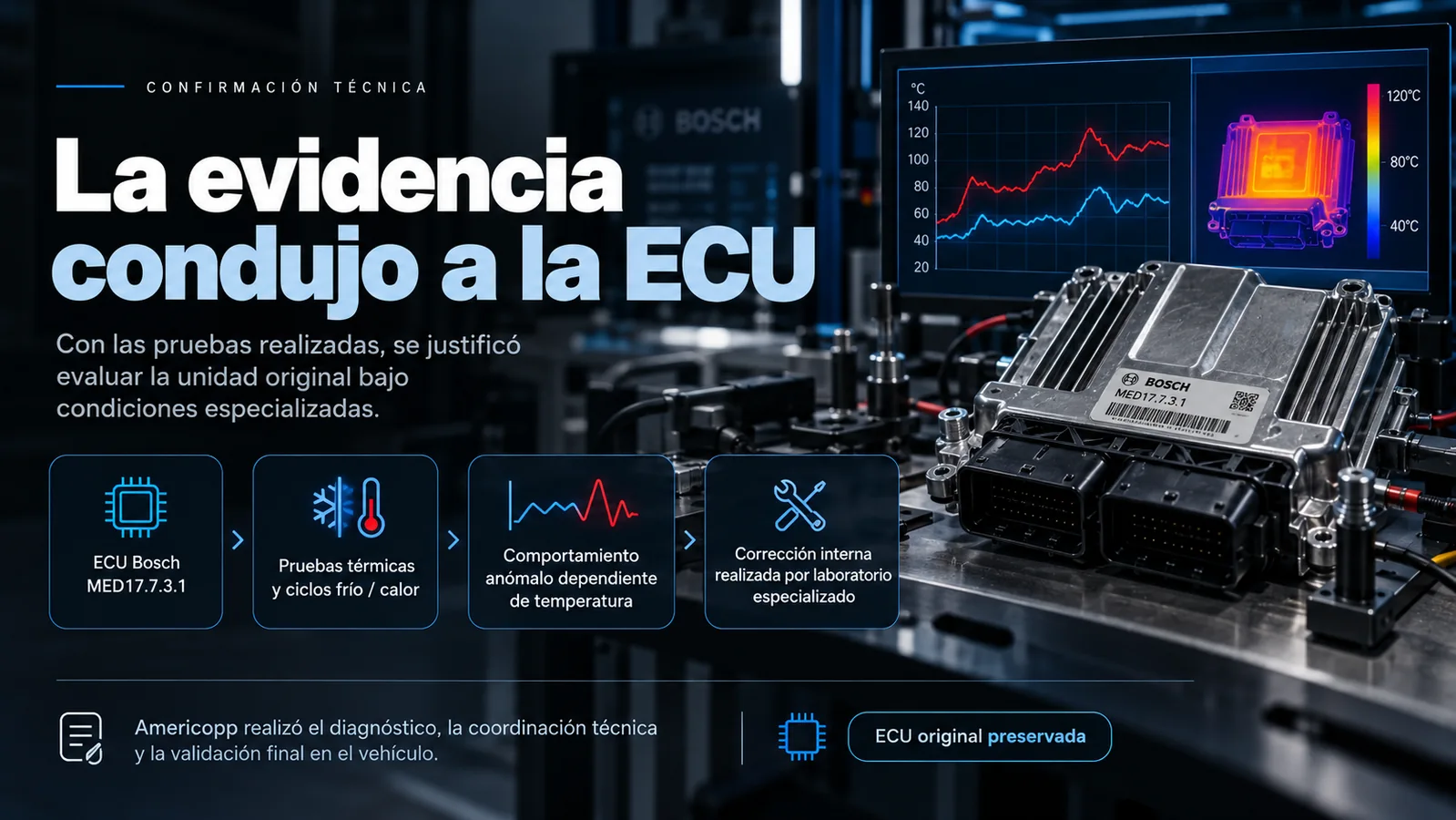
According to the lab, the ECU entered programming boot mode under thermal stress. After finding a defective internal file, it rewrote the content with corrected checksums and repeated thermal testing.
Clear responsibility
Americopp performed the diagnostic investigation, external electrical work, technical coordination, removal, reinstallation and on-vehicle validation. ECU internal repair was performed by an independent specialist lab.
Verified outcome
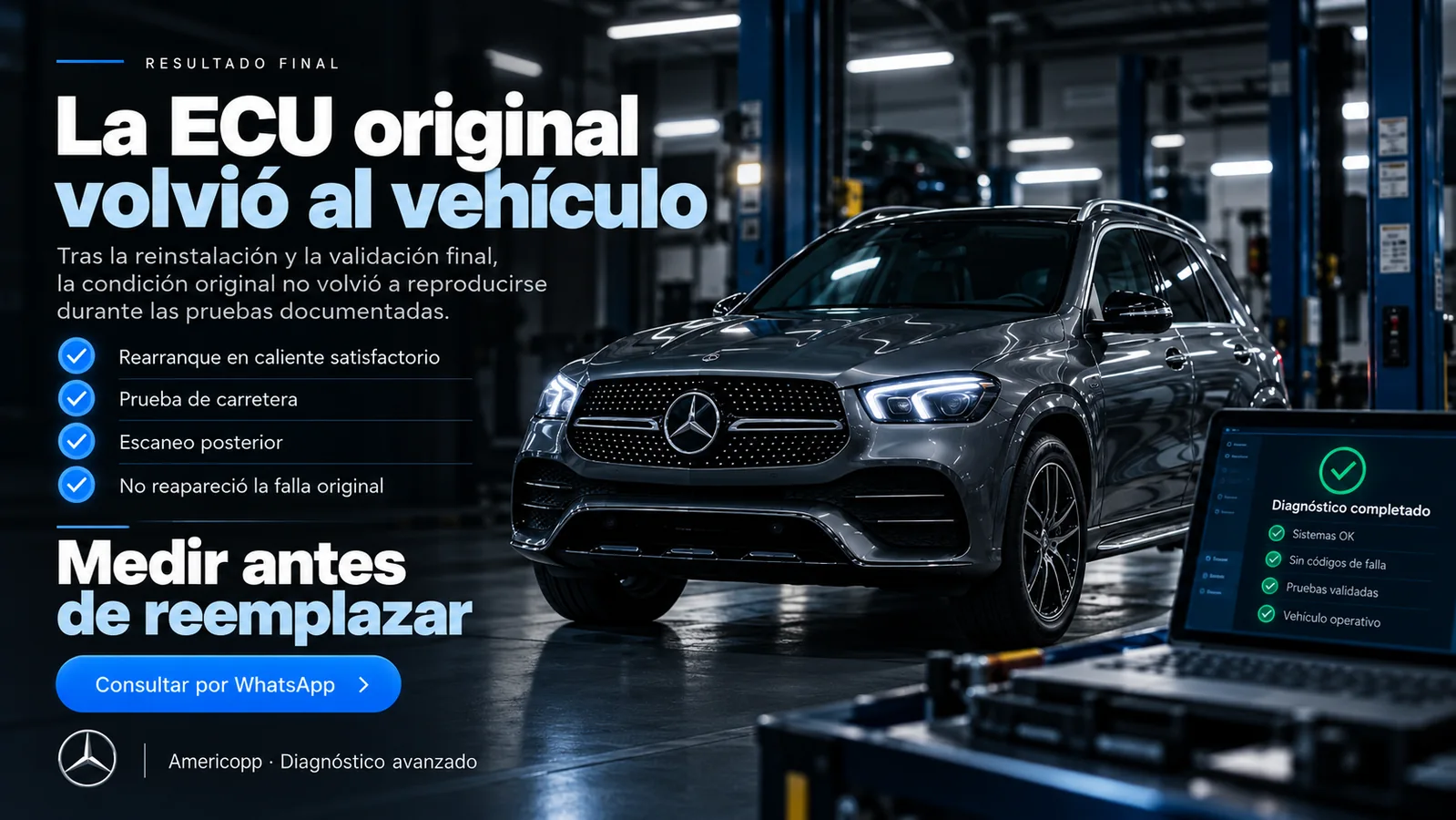
The original ECU was retained. The original fault did not recur in the documented post-repair tests. No replacement ECU coding or programming was necessary.
Laboratory heat-test temperatures describe bench conditions, not engine operating temperatures.